What To Wear On A Chicago River Cruise: A Season-By-Season Dress Guide
The river is windier than the street you walked in on. Here is what to wear so the architecture, not the chill, is what you remember.
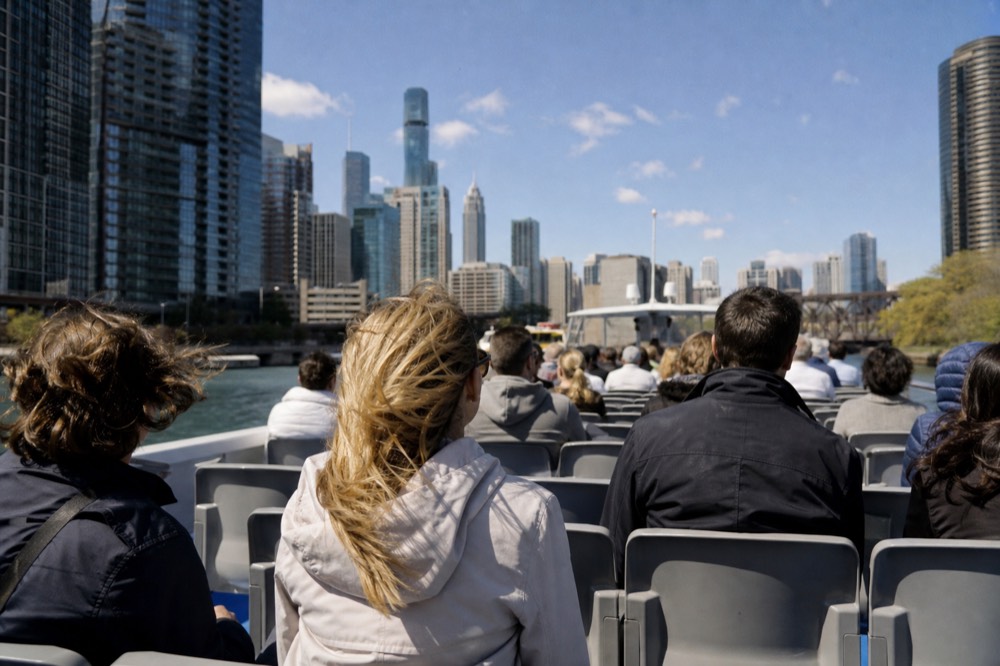
Short answer
Dress in layers with a windproof outer layer, wear flat closed-toe shoes, and bring sunglasses and sunscreen even in cool weather. Wendella’s 45- and 90-minute architecture listings include an enclosed climate-controlled lounge as well as outdoor seating; bring layers if you plan to use the open deck.
The Chicago River runs through a canyon of glass and steel, and that canyon does strange things to the weather. The same September afternoon that feels pleasant on Michigan Avenue can feel raw on the water, because the open decks of the tour boats catch the wind that the buildings block on shore. Most first-time cruisers dress for the forecast and end up buying an overpriced sweatshirt at Navy Pier. This guide exists so you don't.
Everything here is built around how the boats actually operate: open decks, 45 to 90 minute runs, and boarding points on the Riverwalk where there's nowhere to stash a bag you decide you don't want. Before you sort out your outfit, it helps to have your cruise picked out first, because a 45-minute speedboat run and a 90-minute architecture cruise put very different demands on your clothing.
What Should You Wear On A Chicago River Cruise?
Dress in layers you can shed or add without leaving your seat: a t-shirt or light base layer, a warm mid-layer like a fleece, and a windproof jacket on top. Wear flat, closed-toe shoes with decent grip, and bring sunglasses. The decks are open, the wind off the water drops the feels-like temperature well below the forecast, and you'll be standing or seated in the same breeze for the full 45 to 90 minutes.
The single biggest mistake is treating the boat like the sidewalk. On shore, buildings shelter you from the wind; on the river, the wind funnels down the corridor between towers and hits the deck at full strength. Locals who ride regularly, and the crew at Chicago River Cruises will tell you the same thing: bring one more layer than you think you need, because there is no going back to the dock for a forgotten jacket.
The second mistake is footwear. Tour boats have wet spots on the boarding ramp and around the rail, and you may be standing for photos at the bow. Sandals, slick-soled dress shoes, and brand-new heels all fail here. Sneakers, loafers with grip, or any flat closed-toe shoe work fine. If you're cruising in shoulder season, waterproof or water-resistant shoes are a small luxury that pays off on the ramp.
One more planning note: the boarding areas are on the Riverwalk, and most operators don't have lockers. Whatever you bring, you carry. A small crossbody bag or a light backpack is fine; a rolling suitcase is not. If you're coming straight from a hotel, plan a stop to drop bags before you board.
How Cold Does It Actually Get On The Water?
Wendella’s 45- and 90-minute architecture listings include an enclosed climate-controlled lounge as well as outdoor seating; bring layers if you plan to use the open deck. The river corridor channels wind between the towers, the water adds a chill, and once the boat pulls away from the dock you're committed for the whole run. Shade from the buildings can also make sunny stretches feel cool.
This isn't a scare story, it's just how urban water works. The forecast you checked is measured at a land station; on the river, wind speed is higher and evaporative cooling off the water pulls heat off your skin faster. On a mild day with a decent breeze, the deck can feel like a raw early-spring afternoon. On a cool April outing, it can feel like winter never left. The cruise itself is worth it in almost any weather, but only if you dressed for the water, not the calendar.
Season matters enormously here, and so does the time of day. The best time of day for a cruise is usually late morning through sunset, but sunset runs get cold fast in every season except high summer. A July sunset cruise is lovely in short sleeves. A September sunset cruise needs a real jacket.
| Season | Typical deck conditions | What to wear | What to skip |
|---|---|---|---|
| Spring (Mar-May) | Raw wind, changeable | Warm jacket, hat, layers, gloves for early April | Shorts, anything cotton as an outer layer |
| Summer (Jun-Aug) | Warm but windy; sun glare off glass towers | T-shirt, light layer, sunglasses, sunscreen | Heavy fabrics, dark colors in full sun |
| Fall (Sep-Nov) | Cold snaps arrive fast; golden hour gets chilly | Fleece plus windbreaker, warm hat, scarf | Shorts after Labor Day, open shoes |
| Winter (Dec-Feb) | Only a few boats run; some are enclosed | Heavy coat, hat, gloves, warm boots | Open-deck assumptions; check your boat type |
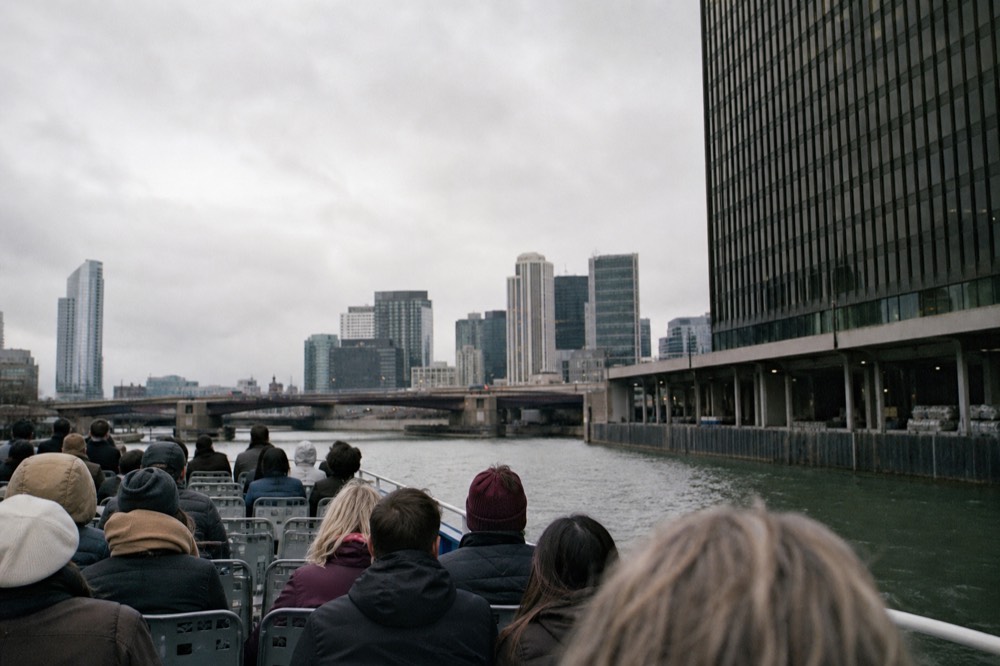
Do You Need Different Clothes For An Architecture Cruise Versus A Speedboat?
Yes. A docent-led architecture cruise is a slow, seated 90-minute experience where a light jacket and layers do the job, while a speedboat run demands a genuinely warm, windproof outer layer, secure footwear, and a strap on any hat or glasses, because you will be moving fast and the wind will find every gap in your clothing.
The 75-minute Seadog speedboat architecture cruise is the extreme case. It's a thrilling ride and it's explicitly not recommended for pregnant passengers or anyone with back problems, which tells you something about the physical experience. Loose scarves, unstrapped hats, and anything that flaps will not survive it happily. On the other end of the spectrum, the calm 90-minute architecture cruises run by Wendella and the Chicago Architecture Center aboard First Lady are essentially floating classrooms: seated, shaded in stretches, and cold mainly when the boat turns into the wind.
For the docent-led cruises specifically, remember you'll be holding still and listening for an hour and a half. Standing still in wind is the coldest way to experience cold. A fleece under a windbreaker beats one heavy coat, because you can unzip during the sunny stretches between bridges.
What Should You Wear For A Sunset Or Night Cruise?
Bring a real jacket even in summer, and add a warm layer from September onward. Sunset runs lose the sun's warmth between boarding and the end of the tour, the river lights don't warm anything, and night wind has no sun offset at all. Closed-toe shoes matter more at night too, since boarding ramps are lit but not always evenly.
The sunset architecture cruise is arguably the best single ride on the river: the buildings light up, the Wrigley Building and Tribune Tower glow, and the skyline photos are unbeatable. But the sun goes down during your cruise, and the temperature follows it. The couples who dressed for the warm part of the day are the ones huddled at the back by the end of the run.
If you're considering a dinner cruise instead, the dress code question changes entirely: those are enclosed, seated experiences with an indoor climate, and the operators expect something closer to restaurant attire than boat gear. For open-deck night sightseeing, treat it like a fall evening in whatever month you're riding.
A few night-specific items earn their place:
- A hat that fits snugly or has a chin strap, since river wind takes loose ones
- Gloves from mid-September; you'll be holding a railing or a phone camera
- A scarf or neck gaiter, the single most efficient warmth-per-ounce item on a boat
- Sunglasses still, for the low sun before it drops
What Should Kids Wear On A Family Cruise?
Dress children one layer warmer than the adults, with a snug hat, grippy closed-toe shoes, and a warm layer even in summer. Wendella’s 45- and 90-minute architecture listings include an enclosed climate-controlled lounge as well as outdoor seating; bring layers if you plan to use the open deck.
The family-friendly architecture cruise runs 45 minutes, which is short enough that you can get away with less gear, but the same wind rules apply. Kids on boats go through three states fast: hot in the sun, cold in the shade, and miserable when the wind picks up. Layers you can pull on and off in a seat are the answer, and operators with shorter runs tend to be the most family-tolerant of fidgeting.
Skip the umbrellas and the wide-brim beach hats for kids on the river: the wind makes both a nuisance. A baseball cap under a hood, or a snug beanie in cooler months, works better.
Does Rain Change What You Should Wear?
Yes: swap the warm layers for a genuinely waterproof shell with a hood, keep the closed-toe shoes, and bring a small towel or compact rain poncho rather than an umbrella. Boats run in rain, umbrellas are useless and unsafe in river wind, and wet fabric chills you far faster than dry fabric, so staying dry matters more than staying warm in summer rain.
Most Chicago river cruises operate in light rain, and the operators are used to it. The deck will be damp, the ramp will be slick, and the wind will drive rain sideways through any gap. A hooded rain jacket over your normal layers is the whole solution. Ponchos work but turn into sails in gusts; hold them down.
If rain looks likely, also protect the things you're carrying for: phone, in a zip pocket or a case, and any paper tickets or guides, which most operators have moved away from anyway. Glasses wearers should note that rain plus wind equals constant lens cleaning; a small cloth in a pocket is a quiet luxury.
| Item | Spring/Fall | Summer | Night cruise | Rain |
|---|---|---|---|---|
| Base layer | Long sleeves | T-shirt | Long sleeves | Long or short sleeves |
| Mid layer | Fleece | Light shirt | Fleece | Fleece under shell |
| Outer layer | Windbreaker | Light jacket | Windbreaker | Waterproof hooded shell |
| Footwear | Closed-toe, grippy | Sneakers | Closed-toe, grippy | Water-resistant shoes |
| Extras | Hat, gloves | Sunglasses, sunscreen | Hat, gloves, scarf | Hood, small towel |
Does What You Wear Depend On Which Cruise You Book?
Yes, a little. The 45-minute Magnificent Mile tour exposes you to the wind for half the time a 90-minute docent-led cruise does, so a lighter jacket gets away with more on the short run. Wendella's 1.5-hour guided cruise and the Chicago Architecture Center's docent cruise aboard First Lady both put you on an open deck for the full ride, so dress for the whole 90 minutes, not the forecast at boarding.
The math is simple: wind exposure scales with time on deck. The 45-minute architecture tour from the Magnificent Mile is the shortest cruise on the river, and a rider on that boat can often get by with the mid-layer alone, since the ride ends before a real chill sets in.
That calculus flips on the longer cruises. Wendella's 1.5-hour guided architecture cruise keeps you exposed to the same river wind for twice as long, and the docent-led Chicago Architecture Center cruise aboard First Lady adds a further wrinkle: you are seated and largely still for close to 90 minutes, and sitting still in wind is the coldest way to experience cold.
Bring the fleece-under-windbreaker combination for the 90-minute rides specifically, since you will not be pacing the deck to stay warm the way you might on a shorter, more active sightseeing run. Whichever operator you book, match your layers to the minutes you will actually spend on an open deck, not to the temperature on your phone when you left the hotel.
What About A Dinner Cruise Instead Of A Sightseeing Cruise?
Dress the way you would for a nice restaurant, not a boat. Odyssey Chicago River, the city's glass-enclosed, climate-controlled dinner cruise, keeps you indoors at a comfortable temperature all year, so the layering rules for open-deck sightseeing cruises do not apply. Save the fleece and windbreaker for a daytime architecture tour, and bring something you would wear out to dinner instead.
Odyssey Chicago River launched in 2018 as the city's first year-round, glass-enclosed dinner cruise on the river, docking near NBC Tower at 455 N. Cityfront Plaza Drive. Because the whole boat is enclosed and climate-controlled, passengers dress for an evening out rather than for wind. A collared shirt or a nice top, real shoes rather than sneakers, and a light layer for the walk to the dock cover most of what the experience actually requires.
The one exception is the walk itself. Cityfront Plaza sits a few blocks from the Michigan Avenue docks the sightseeing operators use, and in winter that short outdoor stretch is colder than the dinner cruise will ever be, so a coat you can check or drape over a chair solves the mismatch. If your trip includes both a daytime architecture cruise and an evening dinner cruise, pack for two completely different climates in the same day: river wind in the afternoon, a warm dining room at night.
Does A Bridge Lift Change What You Should Wear?
A little, mostly because it means more stationary time in the wind. Chicago's recreational bridge lifts run Wednesdays and Saturdays in spring and fall, each one holding boats still for roughly 8 to 12 minutes while a bascule bridge rises. If your cruise catches one, you will be standing or sitting in the open river wind longer than the schedule promised, so the extra layer earns its keep exactly then.
Spring 2026 lifts began April 22, and the fall pattern typically runs from early October through mid-November, which is the same window when river weather turns unpredictable anyway. A boat queued for a lift is not moving, and a boat that is not moving loses the small breeze-cutting benefit that forward motion gives you. Standing still in a spring wind while 27 movable bridges take their turns opening down the canyon is a genuinely cold few minutes if you dressed light.
No operator can promise you will catch a lift, and no operator schedules around them, so this is not a reason to overdress for every cruise between April and November. It is a reason to keep the hat and gloves in your bag rather than the hotel room on a lift-season Wednesday or Saturday departure, since the difference between a normal cruise and one that pauses under a rising bridge is entirely about whether you brought the extra layer.
Common Questions About What To Wear On A Chicago River Cruise
The short version: layers with a windproof shell, flat closed-toe shoes, sunglasses, and one more warm layer than the forecast suggests, adjusted for season, night runs, kids, and rain. Below are the specific questions cruisers ask most, with answers sized to what actually happens on the open decks of the river's tour boats.
What should I wear on a Chicago river cruise?
Layers: a base layer, a warm mid-layer like a fleece, and a windproof outer jacket, plus flat closed-toe shoes and sunglasses. The open deck feels noticeably colder than the street-level forecast when the wind is up, and you're committed for the full 45 to 90 minutes once the boat leaves the dock.
Should I wear a jacket in summer?
Bring a light jacket or long-sleeve layer even in July, especially for sunset cruises. The wind funnels between the towers and the temperature drops quickly after the sun goes down. On a midday summer cruise, a t-shirt plus sunscreen is usually enough, but a tie-around layer is cheap insurance.
Are sandals okay on a river cruise?
They're not recommended. Boarding ramps and deck edges get damp, and you may stand at the rail or move sides for photos. Flat closed-toe shoes with grip are the safe choice. In rain or in shoulder season, water-resistant shoes are even better.
Can I bring a bag on the boat?
Yes, a small bag is fine, but there are no lockers at the Riverwalk boarding points, so whatever you bring, you hold for the whole cruise. A crossbody bag or small backpack works; leave rolling luggage at your hotel.
What should kids wear on a family cruise?
Dress children one layer warmer than the adults, with a snug hat and grippy closed-toe shoes. Wendella’s 45- and 90-minute architecture listings include an enclosed climate-controlled lounge as well as outdoor seating; bring layers if you plan to use the open deck.
Do river cruises run in the rain, and what do I wear?
Most operators run in light rain. Wear a hooded waterproof shell instead of an umbrella, which the river wind makes useless, and keep closed-toe or water-resistant shoes. Staying dry matters more than adding warmth, because wet fabric chills you fastest.
One last thought before you pack. The outfit that ruins a river cruise is rarely the wrong one; it's the right one left at the hotel. The architecture is the show, and the wind is just the ticket price. Dress like you're riding a boat through a windy canyon in whatever month it is, and you'll spend the whole cruise looking up instead of shivering down.
If you're still choosing between operators, the operator comparison guide breaks down how Wendella, Shoreline, and First Lady differ, and how long a river cruise runs tells you exactly how long you'll be out on the water, which is the real number your outfit has to survive.
Choose Your Chicago Cruise Date
Initial editorial recommendation. Change the options below to narrow the shortlist.
Wendella 90-Minute Architecture Cruise
Have a travel date in mind? Live architecture commentary through all three branches, with an enclosed lounge. Check the departure before arranging the rest of your day.
Arrive 30 minutes early; travel to the dock is additional. Indoor and outdoor seating. Food and drinks cost extra. Confirm the terms for your chosen departure.
Select a date to inspect Viator’s scheduled departures. Seats and final price are confirmed on Viator.
Schedule only, not confirmed availability. The booking link works even if schedules cannot load.
Compare Options And Fit This To Your Day
Add travel to and from the dock separately. Lake traffic can extend timings; a flight or tight connection needs a larger buffer.
Choices narrow the reviewed shortlist; they do not confirm eligibility, a seat or a departure. Check the exact ticket restrictions before paying.
Wendella 90-Minute Architecture Cruise: Live architecture commentary through all three branches, with an enclosed lounge. Arrive 30 minutes early; travel to the dock is additional. Indoor and outdoor seating. Food and drinks cost extra. Confirm the terms for your chosen departure.
Wendella 45-Minute Architecture Cruise: A shorter narrated trip along the main river and part of the South Branch. Arrive 30 minutes early; travel to the dock is additional. Indoor and outdoor seating. Food and drinks cost extra. Confirm the terms for your chosen departure.
Wendella Lake And River Cruise: Combine close-up river architecture with the skyline from Lake Michigan. Arrive 30 minutes early; travel to the dock is additional. Indoor and outdoor seating. Food and drinks cost extra. Confirm the terms for your chosen departure.
Compare Two Party Quotes
Enter the final total for your whole party in the same currency, including required fees. Add optional drinks, transport and a separate meal consistently.