Is The River Cruise In Chicago Worth It?
An honest look at whether a Chicago river cruise is worth the money and time, with what you actually see, who it suits, and when to skip it.
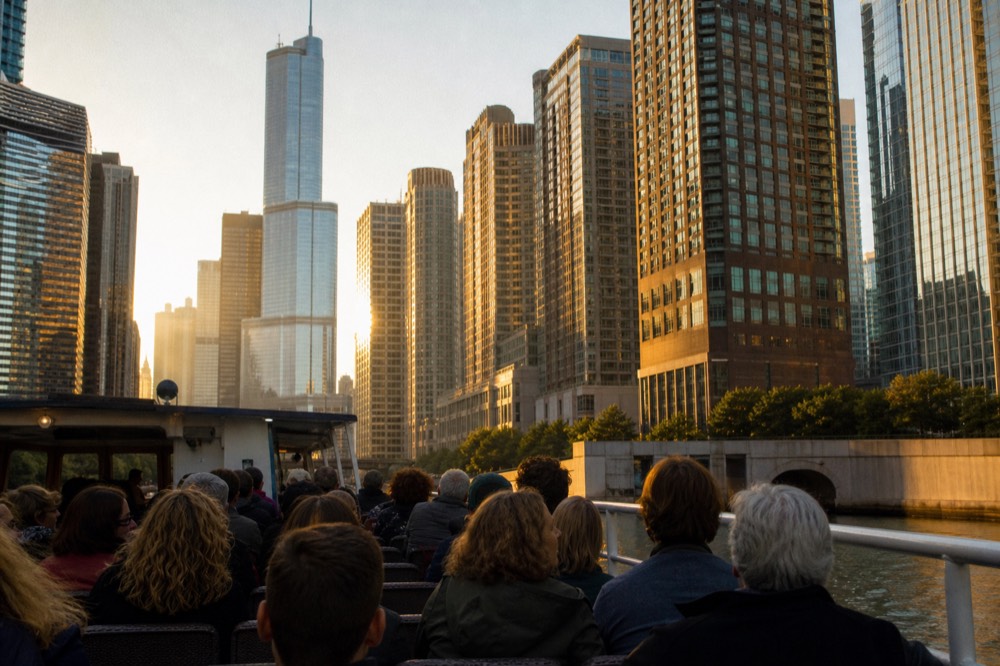
A Chicago river cruise is the one tourist activity in this city that locals genuinely rate, and that's rare. The Chicago Architecture Center's docent-led version has been named the #1 boat tour in the US by USA Today, and the biggest operator on the river, Shoreline Sightseeing, carries just over 1 million passengers a year on average. People do not ride a boat a million times a year by accident.
But "worth it" is a fair question, because the tickets are not free and the experiences vary a lot. A 45-minute hop from the Magnificent Mile and a 90-minute docent-led deep dive are different products at different prices. This article gives you the honest breakdown: what you actually get, what it costs in time and money, who it works for, and the specific situations where you should skip it entirely.
One more framing note before we start. "Worth it" questions get dishonest answers all over the travel internet, usually in one of two directions. Some sites oversell everything because they profit from every booking. Others perform skepticism to seem trustworthy, then recommend the product anyway. The honest position here is that the cruise is worth it for most people, not all people, and that the difference between a great spend and a wasted one comes down to three decisions you make before you ever step on a boat: which cruise, which departure, and which expectations. Everything below is built around helping you make those three calls correctly.
Is The River Cruise In Chicago Worth It?
For most first-time visitors, yes, a Chicago river cruise is worth it. It is the single best way to understand why Chicago's skyline looks the way it does, the commentary turns buildings you'd walk past into stories, and even the shorter 45-minute versions deliver the core experience. It's only a poor value if you book a mismatched cruise, go at the wrong time, or expect a thrill ride.
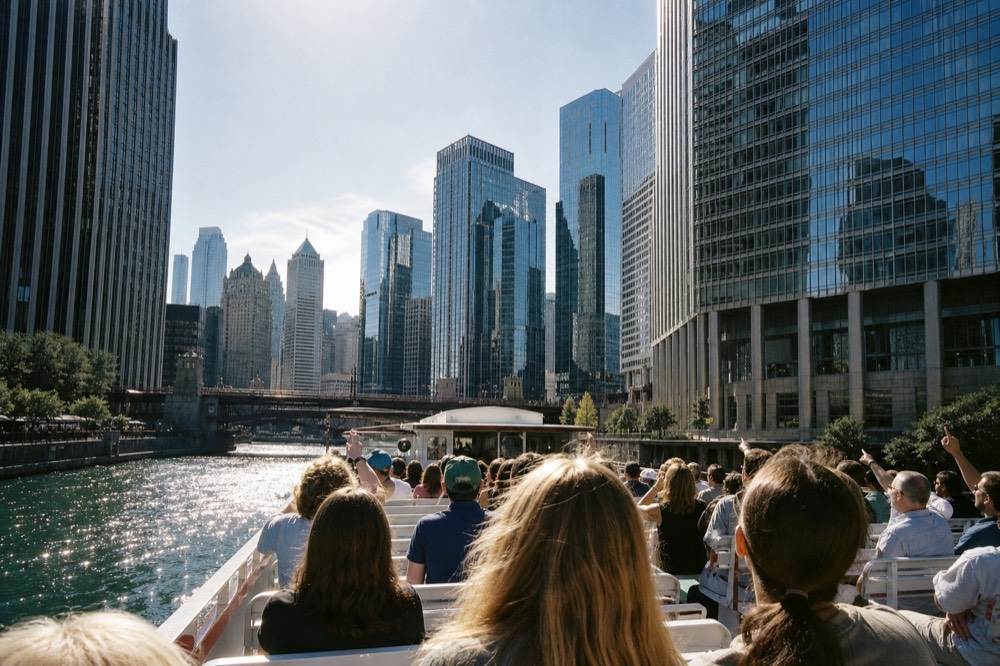
The case for the cruise is simple. Chicago's architecture is the city's defining feature, and the river is the only place you can see it properly. From street level, the buildings are too close to read. The canyon of Michigan Avenue gives you fragments: a lobby here, a cornice there, a sliver of a tower between two others. From the river, at water level, you get the perspective the architects designed for, with a guide explaining what you're looking at, why it looks that way, and what was standing on that spot before it.
That last part is what separates the river cruise from every other big-city boat tour. In a lot of cities, the boat is a viewing platform with some light narration bolted on. In Chicago, the narration is the product. The docent-led format was built from scratch as an architecture education program, and the standard tours inherited that DNA. You are not riding a boat past buildings. You are taking a floating class taught by people who care about the material, and the material happens to be one of the great skylines on earth.
The case against is real too, and honest writing means naming it. The weather can ruin a trip. Lake access depends on the operating schedule, weather and current lock notices; there is no standing mid-November-to-mid-April closure that automatically turns every lake cruise into a river-only trip. And a crowded boat with a weak guide is a mediocre hour, no matter how good the buildings are. Crowds thin out if you pick your departure well, and weak guides are rare on the top-rated products, but the weather risk is real and you should plan around it rather than pretend it away.
Each of these does the core job well. The Shoreline skip-the-ticket-line cruise is the easiest booking for a first-timer checked September 2026. Wendella's 1.5-hour guided architecture cruise comes from the operator that has been running the river since 1935 and claims to have launched Chicago's first architecture-focused river tour. The 45-minute Magnificent Mile tour is the compressed version, flagged as likely to sell out, and best for tight schedules.
Think of the choice as a dial, not a menu. At one end you have the shortest, cheapest taste of the river. At the other end you have the full docent-led program that covers all three branches of the river and more than 50 buildings. Both ends are legitimate purchases. The mistake happens in the middle, when someone with two hours of patience buys a 90-minute cruise, or someone who genuinely loves architecture buys the 45-minute express and leaves hungry for more. Know which person you are before you pay.
How Much Does A Chicago River Cruise Cost In Time And Money?
Ticket prices vary by operator and tour length, but the short versions generally cost less than the 90-minute docent-led cruises, and many listings show the current price only on the live listing, so check there before budgeting. In time, plan on 45 to 90 minutes on the water plus boarding, so budget two hours door to door.
Here's the honest pricing picture, checked September 2026. Check the actual departure choices for your date; ratings and past demand do not establish current availability. That's not a dodge, it's how these products work: prices shift with season, day, and demand. A Saturday sunset departure in July and a Tuesday noon departure in April are not the same product even when they share a listing.
What that means for you as a buyer is simple: treat the listed price as a floor and a starting point, not a promise, and check the live listing for the departure you actually want before you build your budget. The good news is that the price spread across the whole category is modest. You are not choosing between a budget option and a premium one. You are choosing between products clustered in a fairly narrow band, which means the decision should be driven by format and schedule, not by shaving a few dollars off the ticket.
The time cost is more predictable than the money cost, and it's the cost people forget to budget:
| Cruise type | Time on water | Best for | Honest catch |
|---|---|---|---|
| 45-minute architecture tour | 45 minutes | Tight schedules, first taste | Departure choice varies by date and party size; check the actual calendar before arranging the rest of the day. |
| 75-minute speedboat cruise | 75 minutes | Thrill-seekers | Not suitable if pregnant or with back problems |
| 90-minute docent-led cruise | About 90 minutes | Architecture fans, the full experience | Departure choice varies by date and party size; check the actual calendar before arranging the rest of the day. |
| Lake and river cruise | 1.5 hours | People who want the skyline from the water | Lake access depends on the operating schedule, weather and current lock notices; there is no standing mid-November-to-mid-April closure that automatically turns every lake cruise into a river-only trip. |
The boarding process is the hidden time cost. You need to arrive before departure, find the dock, and get in line, and on a busy summer weekend the dock itself is a scene. The skip-the-ticket-line products exist precisely because the dock queue is the weakest part of the experience. When you plan your day, treat the cruise as a two-hour block even when the boat time is 45 minutes. If you sandwich it between two hard reservations, you will spend the whole ride watching the clock instead of the buildings.
One planning note most first-time visitors miss: the Chicago Architecture Center's 2026 season aboard Chicago's First Lady runs March 15 through November 22. If you're visiting in deep winter, Wendella is the standout year-round option, operating every day except Christmas Day. Part of what you're paying for is what happens on deck itself, not just the narration, and our look at what's actually available onboard breaks that down. If your trip lines up with a Wednesday or Saturday night in summer, it's also worth knowing where Navy Pier's real fireworks show fits into the schedule, since none of these daytime cruises run late enough to catch it.
Should you book in advance or at the dock?
Book in advance. The most popular cruises carry "likely to sell out" flags for a reason, and the dock lines for walk-up tickets can eat a big chunk of your day on a nice Saturday. Beyond the queue, there's a real availability risk: the top departures, especially sunset slots in summer, genuinely fill up, and showing up at the dock hoping for two seats is how people end up either paying for a departure they didn't want or missing the cruise entirely. The skip-the-ticket-line products solve the queue problem, but they don't solve the sell-out problem, only booking early does that. If you want the deeper reasoning, we cover it in when to book a Chicago river cruise.
What Do You Actually See On A Chicago River Cruise?
You see more than 50 buildings on the longer architecture cruises, including the Wrigley Building, Tribune Tower, Marina City, Willis Tower, the Merchandise Mart, 333 West Wacker, and Trump International Hotel and Tower, narrated the whole way. The route runs through the river's branches, past bascule bridges, under the train tracks, and on some tours out to the lake for the skyline view.
That list isn't marketing copy. It's the actual roster of buildings the docents and guides name and discuss. Marina City alone is worth the narration: those corncob-shaped towers were a bold experiment in mixed-use city living, and most people photograph them without ever learning the story behind them. The Merchandise Mart was once the largest building in the world by floor area and is still staggering from the water. 333 West Wacker curves along the riverbend like it was poured into place, because in a sense it was: the building's shape follows the curve of the river at that point, and the guide will tell you so.
The deeper thing the cruise gives you is the story of the river itself, and this is the part that surprises people. Chicago reversed its own river in 1900, opening the Sanitary and Ship Canal on January 2 of that year so the flow, which had been carrying sewage into Lake Michigan, the city's drinking-water source, was diverted toward the Mississippi basin instead. It was a response to typhoid and cholera outbreaks, overseen by the Sanitary District of Chicago, which was established in 1889 to build a 28-mile canal that let gravity carry the river's flow toward the Des Plaines River. It was one of the great engineering projects of its era, and the lock system that resulted, including the Chicago River Controlling Works, is what makes the tour boat routes possible today.
If you're curious about the river's less glamorous side, we go into it honestly in why the Chicago river looks the way it does. The short version: it's far cleaner than its reputation, and the cruise is a good vantage on the ongoing cleanup story.
There's also a piece of river choreography that regulars know and first-timers don't: the bridge lifts. Twice a week in spring and fall, on Wednesdays and Saturdays, the city raises its movable bascule bridges along the river so sailboats can pass between the river and the lake, each lift taking roughly 8-12 minutes across 27 bridges. If your cruise happens to run during a lift schedule window, you may catch the bridges going up, which is a spectacle most visitors never plan for and never forget. The fall lifts run from early October to mid-November, and the spring lifts begin in late April.
When Is A Chicago River Cruise Not Worth It?
Skip the cruise if you're expecting a thrill ride or nightlife, if you have less than two hours to spare, if you're visiting during a stretch of severe weather with no flexibility, or if nobody in your group cares about buildings at all. A river cruise is a slow, narrated architecture experience on water, and booking it under false expectations wastes your money.
The mismatch cases are specific. If you want speed, the Seadog speedboat cruise is the right product, not an architecture cruise, and it's worth knowing that the speedboat version comes with real restrictions: it's not suitable for pregnant women or anyone with back problems. If you want dinner and drinks, the narrated cruises are genuinely different products, and mixing them up is a common disappointment. A dinner cruise is about the meal and the evening; an architecture cruise is about the buildings. Neither is worse, but they are not substitutes.
Weather deserves an honest paragraph. Rain doesn't cancel most cruises, and the boats run in conditions that would scare off a picnic. But a cold, gray, windy day genuinely degrades the open-deck experience, because the best parts of the cruise involve looking up and out for an hour or more. The glass-enclosed boats exist for a reason. If your travel dates are fixed and the forecast is bad, the indoor-seating options are the safer spend, and if your dates are flexible, move the cruise to your best-weather day and put a museum on the bad one.
Families with small kids are a real edge case. A 90-minute narrated cruise can test a young child's patience, and a restless kid makes the hour long for everyone within earshot. There's a 45-minute family-friendly architecture cruise in the city, which is exactly the right length for shorter attention spans, and it's a better spend than gambling on the full-length version. The honest test: if your group can't sit through a documentary about buildings, book the short cruise or skip the category.
The last skip case is the person who has done it before and done it recently. If you rode the architecture cruise two years ago, the buildings have not moved. The exception is the docent-led version, where the docent rotation means the commentary genuinely varies, and the small-boat historic tours, which run a different experience entirely. But for repeat visitors on a tight itinerary, the river cruise is a once-per-few-years purchase, not an every-trip ritual.
Which Chicago River Cruise Is The Best Value For The Money?
For pure value, the 45-minute architecture tours deliver the core skyline-and-commentary experience at the lowest time and price commitment. For the best experience per dollar, the 90-minute docent-led cruises are worth the premium if architecture is even slightly interesting to you. The worst value is the middle: booking a long cruise you zone out of, or a short one when you wanted depth.
Here is the comparison that matters, drawn from the actual ratings and review counts on the listings:
| Cruise | Rating | Reviews | Length | The value case |
|---|---|---|---|---|
| Wendella 1.5-hour guided architecture cruise | 4.8 | 7,960 | 1.5 hours | Check the actual departure choices for your date; ratings and past demand do not establish current availability. |
| Shoreline skip-the-ticket-line architecture cruise | 4.8 | 4,356 | 1-1.5 hours | Ticket-office bypass; normal boarding queue |
| 45-minute Magnificent Mile architecture tour | 4.7 | 3,551 | 45 minutes | Cheapest time commitment, sells out |
| Lake and river architecture tour | 4.7 | 1,861 | 1.5 hours | Adds the lake skyline view |
Departure choice varies by date and party size; check the actual calendar before arranging the rest of the day.
Notice what the numbers say: every major operator sits between 4.7 and 4.8. There is no bad cruise among the top products. That uniformity is unusual in travel, where ratings usually spread much wider, and it tells you something important: the choice is about format, length, and boarding location, not about avoiding a dud. Check the actual departure choices for your date; ratings and past demand do not establish current availability. You can only buy the wrong boat for you.
The one cruise worth stretching for is the docent-led version. It's narrated by Chicago Architecture Center-trained volunteer docents rather than crew commentary, a format the CAC has run since 1983, and it's the cruise USA Today has repeatedly named the #1 boat tour in the US. The docent detail matters more than it sounds: a volunteer who trained for months to give this specific tour is a different narrator than a crew member reading from a script, and riders can tell the difference within the first bridge. That's the product where "worth it" tips from "yes" to "unmissable" for architecture fans. If you want the full decision framework, see the best Chicago river cruises.
Common Questions About Whether A Chicago River Cruise Is Worth It
The short answers below cover the questions people ask most: yes, it's worth it for most first-timers, the architecture versions beat the general sightseeing versions if you care about buildings at all, cruises run 45 to 90 minutes, late afternoon is the best light, most operators pause in winter, and even locals rate the experience. Each answer is one paragraph, no fluff.
Is the river cruise in Chicago worth it?
For most first-time visitors, yes. It's the best vantage on the city's defining feature, the commentary earns its cost, and the top products all rate between 4.7 and 4.8. It's only weak value when expectations mismatch, like booking a narrated architecture cruise when you wanted a speedboat.
Is the architecture cruise better than the regular sightseeing cruise?
If you care even slightly about buildings, yes. The architecture versions are the products that made the river famous, and the docent-led format is the one USA Today has ranked #1 in the US. The general sightseeing cruises are fine but shallower.
How long is a Chicago river cruise?
Between 45 minutes and 90 minutes on the water, depending on the product. The 45-minute tours cover the main branch highlights, while the 90-minute versions cover more than 50 buildings across the river's branches.
What is the best time of day for a Chicago river cruise?
Late afternoon into golden hour is the sweet spot for photos and light, and sunset departures are the most popular for good reason. Morning cruises are quieter and cooler, which matters in July.
Do Chicago river cruises run in winter?
Mostly no. Lake access depends on the operating schedule, weather and current lock notices; there is no standing mid-November-to-mid-April closure that automatically turns every lake cruise into a river-only trip. Wendella is the exception, running year-round except Christmas Day.
Is a Chicago river cruise worth it for locals?
Yes, and that's a real signal. The river cruise is one of the few tourist activities Chicagoans recommend to visiting friends, partly because the docent commentary goes deeper than most residents' knowledge of their own skyline. If you've done the standard version, the small-boat historic tours offer a different angle.
The Bottom Line
The verdict, stated plainly: a Chicago river cruise is worth the money for the large majority of visitors, because the river is the only place the city's defining art form can actually be seen whole, and the top-rated products deliver it reliably. Book the length that matches your attention span, reserve ahead for the sell-out departures, and aim for golden hour if your schedule allows.
The reason this verdict holds up is structural, not sentimental. The river is the only place this city's defining art form can actually be seen. Every other Chicago experience, the observation decks, the riverwalk, the Mag Mile, gives you the skyline from a fixed point. The cruise moves through it, under the bridges, past the towers, at the speed the buildings were meant to be read. Pick the length that matches your attention span, book ahead for the sell-out departures, and go at golden hour if you can. For the easiest first booking, the skip-the-ticket-line architecture cruise from Shoreline is the one we'd hand a friend. More on choosing between operators at Chicago River Cruises.
Choose Your Chicago Cruise Date
Initial editorial recommendation. Change the options below to narrow the shortlist.
Wendella 90-Minute Architecture Cruise
Have a travel date in mind? Live architecture commentary through all three branches, with an enclosed lounge. Check the departure before arranging the rest of your day.
Arrive 30 minutes early; travel to the dock is additional. Indoor and outdoor seating. Food and drinks cost extra. Confirm the terms for your chosen departure.
Select a date to inspect Viator’s scheduled departures. Seats and final price are confirmed on Viator.
Schedule only, not confirmed availability. The booking link works even if schedules cannot load.
Compare Options And Fit This To Your Day
Add travel to and from the dock separately. Lake traffic can extend timings; a flight or tight connection needs a larger buffer.
Choices narrow the reviewed shortlist; they do not confirm eligibility, a seat or a departure. Check the exact ticket restrictions before paying.
Wendella 90-Minute Architecture Cruise: Live architecture commentary through all three branches, with an enclosed lounge. Arrive 30 minutes early; travel to the dock is additional. Indoor and outdoor seating. Food and drinks cost extra. Confirm the terms for your chosen departure.
Wendella 45-Minute Architecture Cruise: A shorter narrated trip along the main river and part of the South Branch. Arrive 30 minutes early; travel to the dock is additional. Indoor and outdoor seating. Food and drinks cost extra. Confirm the terms for your chosen departure.
Wendella Lake And River Cruise: Combine close-up river architecture with the skyline from Lake Michigan. Arrive 30 minutes early; travel to the dock is additional. Indoor and outdoor seating. Food and drinks cost extra. Confirm the terms for your chosen departure.
Compare Two Party Quotes
Enter the final total for your whole party in the same currency, including required fees. Add optional drinks, transport and a separate meal consistently.